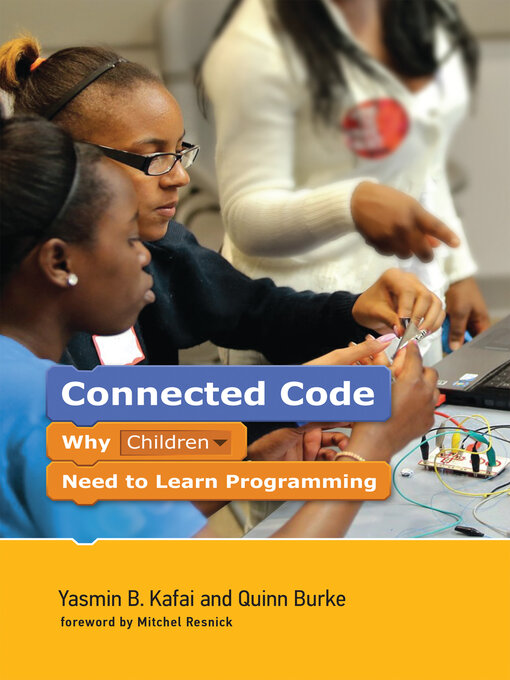
Coding, once considered an arcane craft practiced by solitary techies, is now recognized by educators and theorists as a crucial skill, even a new literacy, for all children. Programming is often promoted in K-12 schools as a way to encourage "computational thinking" — which has now become the umbrella term for understanding what computer science has to contribute to reasoning and communicating in an ever-increasingly digital world.In Connected Code, Yasmin Kafai and Quinn Burke argue that although computational thinking represents an excellent starting point, the broader conception of "computational participation" better captures the twenty-first-century reality. Computational participation moves beyond the individual to focus on wider social networks and a DIY culture of digital "making." Kafai and Burke describe contemporary examples of computational participation: students who code not for the sake of coding but to create games, stories, and animations to share; the emergence of youth programming communities; the practices and ethical challenges of remixing (rather than starting from scratch); and the move beyond stationary screens to programmable toys, tools, and textiles.
- Available Now - Ebooks
- Unputdownable ebooks!
- New eBook additions
- Rapid Reads! (Always available)
- Read Before You Watch
- Addiction Affects Everyone
- NSFW! - ebooks
- Harry Potter around the world
- 中文标题
- Livres en Français
- Graphic novels & comics - for adults
- Most popular
- Read a Banned Book
- See all ebooks collections
- New audiobook additions
- Unputdownables!
- Read a Banned Book
- Hola, Bonjour, Hallo, Ciao, Namaste, Marhaba! Learn a language
- Author interview Podcasts (Professional Book Nerds) - Always Available
- Nonfiction Audio - Always Available!
- Fiction Audio - Always Available!
- En Français, comprenez-vous?
- по-русски, понимаете ли вы?
- NSFW!
- Harry Potter around the world
- Most popular
- Available now
- See all audiobooks collections